



It’s the weekend, and nothing beats a bottle of wine and a new story-driven game to play! Maybe a cute indie game to relax and chat with friends on Discord. 😌🎮
If this sounds like you or something you’d like to do,I’m pretty sure you’ve had this dilemma before:
Should I turn off my brain for a few seconds, embrace the risk, and visit FitGirl’s website for a cracked game? Or should I be wiser, spend some money on Steam, and play safely?
Well, after reading this article, you might start thinking more than twice I promise!
I was in that exact situation today. I was hanging out on Discord with my people, telling them how tired I was and how I just wanted to buy a new game to chill. Lol! And guess what? My homie said, “Keep downloading Steam games, and you’ll get pwned soon!“ HAHA!
We’re a branch of hackers. We know how a lot of things work, but we also believe there’s a lot we don’t know. So, I asked my friend what he was talking about—and he showed me this article :
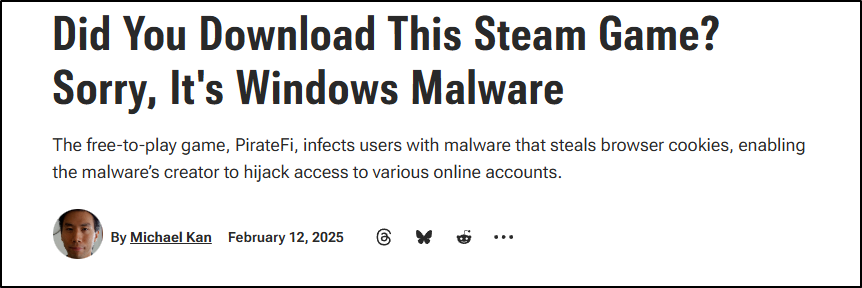
Dude, what?! Are you telling me that games hosted on Steam contain malware?
Isn’t Steam supposed to be the safe place to download games?
Unfortunately, it’s true, Steam isn’t as safe as you might think. Just like the Play Store or any other game marketplace, hackers always find ways to spread malware. But the real question is : how?
I mean, isn’t Steam a huge company? Don’t they have a security team doing thorough checks and reviews?
I don’t know, man… But with the crazy prices we pay for games, I’m not buying the idea that they don’t have security checks or that they have weak ones!
To make myself believe, I need to see the truth, smell it, and taste it.
So let’s do our research!

First thing to do is understandhow things work.
So, how are games pushed onto Steam, and who can upload them ? 🤔
This a general little map I mad to make you understand how it wors :
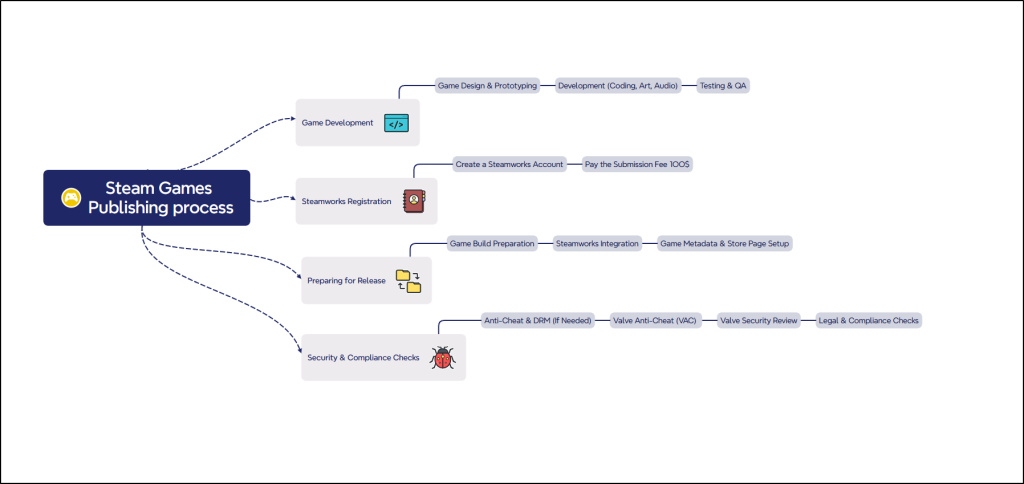
You should know that anyone can create and publish a game on Steam including you.
The process is surprisingly simple. Here’s how it works:
1️⃣ Develop the game – Whether it’s a small indie project or a full-fledged title, you just need a playable build.
2️⃣ Create a developer account on Steamworks – This is Steam’s platform for game creators.
3️⃣ Pay a $100 fee – This one-time fee per game grants you publishing rights.
4️⃣ Submit your game for review – Steam runs a basic verification process before approving it for release.
Sounds safe, right? Not really. The review process isn’t as strict as you might think, which opens the door for shady developers to sneak in malicious code.
But let’s dig deeper… How does Steam actually review these games, and can malware slip through?
Steam does have a review process, but it’s not as strict as you might expect. Unlike mobile app stores that use automated malware scans and security policies, Steam’s approach is more focused on content moderation rather than deep security analysis. Here’s how it works:
1️⃣ Basic Verification – Steam ensures that the developer has paid the $100 fee and that the game has actual content (not just a blank launcher).
2️⃣ Automated Scans – Some basic checks are performed, but they mainly focus on preventing obvious scams, not deep malware detection.
3️⃣ Community Review & Reports – Once a game is published, it relies heavily on user reports and reviews. If a game is flagged as suspicious, Steam might investigate.
The Problem?
💀 No Deep Security Audits – There’s no in-depth malware scanning or strict sandbox testing like you’d find on Apple’s App Store.
💀 Social Engineering Works – Hackers can disguise malicious software as game launchers, mods, or even “updates.”
💀 Once It’s Live, It’s Too Late – By the time Steam removes a bad game, many users might have already downloaded it.
So, can malware slip through? Absolutely. Hackers just need to disguise it well enough to pass Steam’s surface-level checks. But what kind of malware are we actually talking about? Let’s break it down… 🔥👀
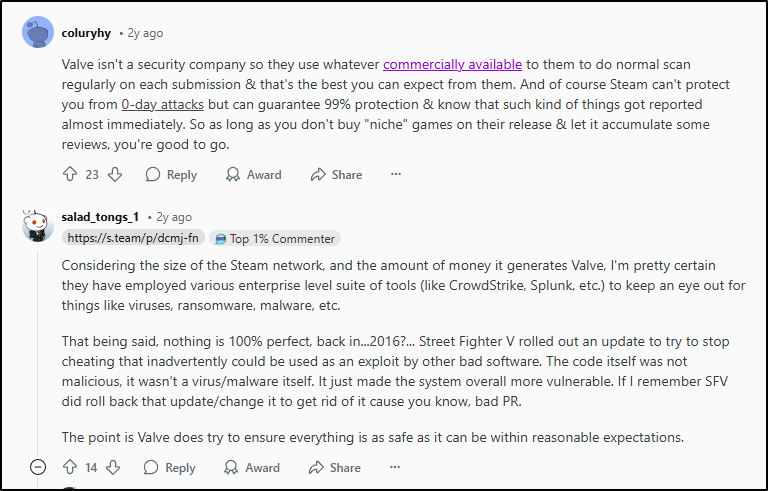
Looking arround on the internet ive found people talking about this :
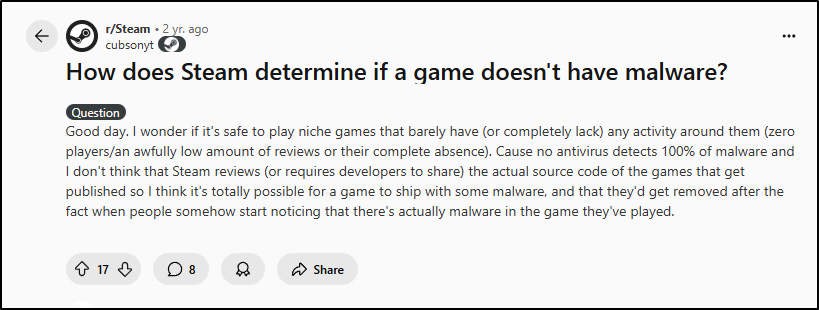
Firsy Who is Valve, and What’s Their Role in This?
Before we go deeper, let’s talk about Valvethe company behind Steam.
Valve Corporation is a gaming giant that started in 1996, best known for legendary titles like Half-Life, Counter-Strike, and Portal. But what really put them on another level was the launch of Steam in 2003—which began as a simple game launcher and evolved into the world’s biggest PC gaming marketplace.
What’s Valve’s Role in Steam?
Valve owns and operates Steam, meaning they control everything from game publishing rules to security policies. But here’s the catch:
🔹 They prioritize profits over policing – Steam takes a 30% cut from every game sale, meaning their goal is to have more games, more sales, more revenue—not necessarily more security.
🔹 They rely on automation – Instead of having a strict security team manually reviewing each game, Valve automates most of the process. This makes it easier for sketchy developers to slip through.
🔹 They have a history of ignoring issues – Valve has been called out multiple times for allowing scam games, fake developers, and even malware-ridden software to be sold on Steam. Their slow response to security risks has raised serious concerns in the gaming community.
So, Can We Really Trust Steam?
Steam is massive, but it’s also flawed. Valve’s hands-off approach makes it easy for malicious actors to take advantage of the system. And if you think they’re actively hunting down malware before it reaches you… think again.
The real question is: What kind of threats are we dealing with, and how are hackers exploiting Steam? 🔥💀
Before we dive into that, let’s zoom in and take another look at that last Reddit screenshot. It mentions something interesting back in 2016, Street Fighter V rolled out an update meant to stop cheating, but instead, it introduced a serious vulnerability. This flaw could be exploited by other malicious software, making the system even more vulnerable.
So, this isn’t a new issue. In fact, I found multiple articles discussing similar incidents. Steam’s security flaws have been exposed before, and the risks are still very real today. Let’s break it down… 🚨👀
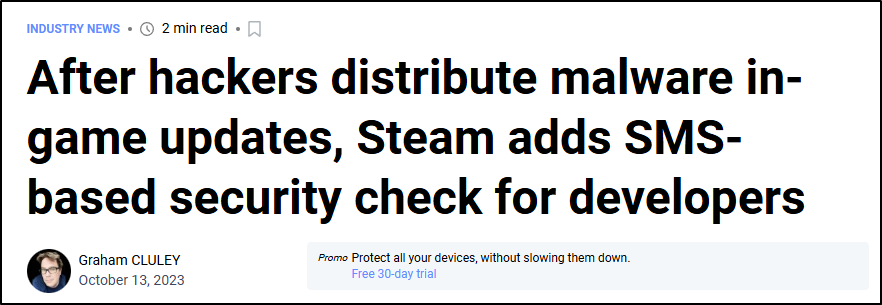
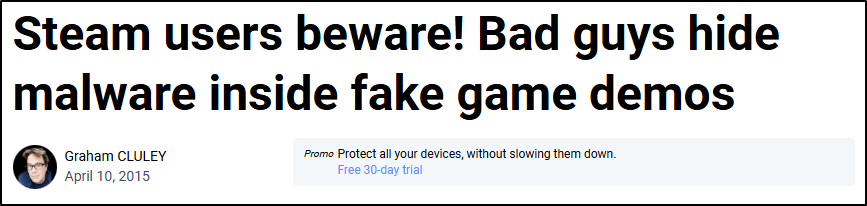
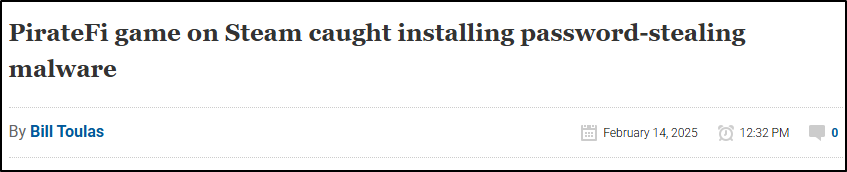
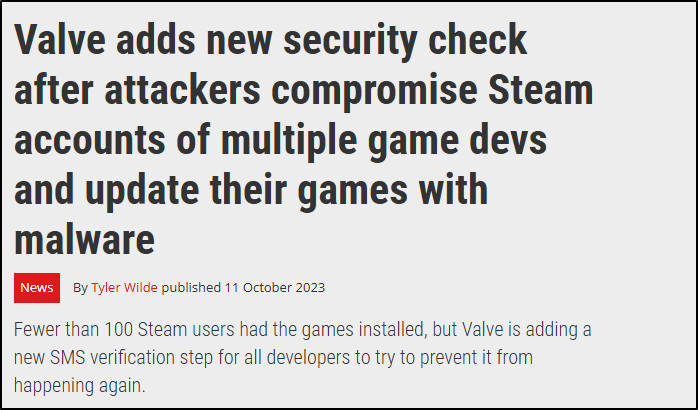
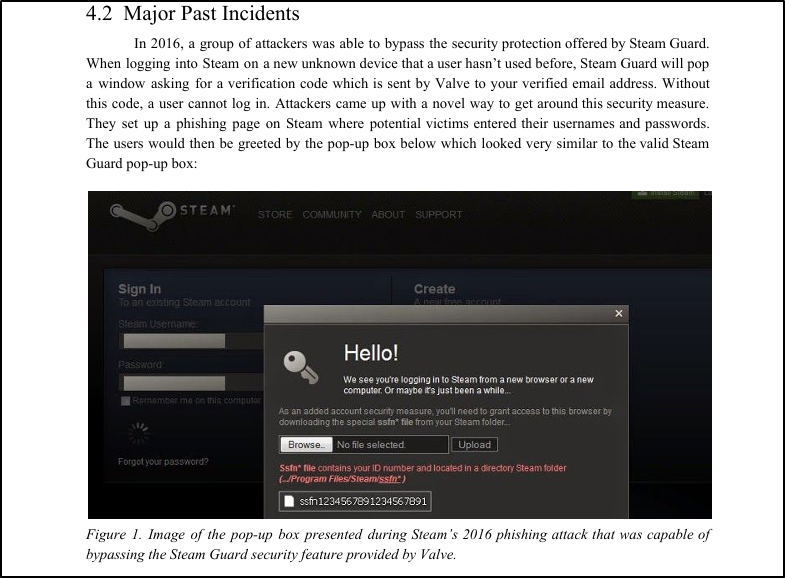
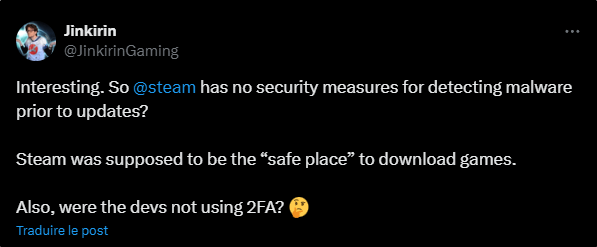
This is a lot—and with so many other articles out there, it only proves that this is real.
Now, let’s get back to the most important question:
What kind of threats are we dealing with, and how are hackers exploiting Steam? 🔥💀
Due to my daily job as a redteamer the answer for this question was obvios and here is some scenarios that may happen!
First take a look and how the steam dev dashboars looks like from inside when you create an account for the first time


They’ll ask for some information, but you can just throw in random bla bla data and pay the fee no problem.
There’s no verification to check if your company actually exists or if your dev team is even real. As long as you pay, you can publish. 💰🚀

So, it’s easy, right? You develop a sweet, undetectable piece of malware, mix it into a game, and publish it on Steam.
Well… it’s possible, but is it the best way?
Do you have the skills to create a game that actually attracts players? Doubt it. 😂
Do you have a big company name with an existing fanbase waiting for your releases and updates? Absolutely not.
So… what now?
Well, why not target gaming companies instead?
Pwn their engineers and employees, steal their accounts, and use them to push your malware the easy way.
Sounds a bit too advanced for your skiddie skills, huh? 😏
Or maybe… you don’t even need to hack them. Because guess what?
They’re already hacked.
Just check these stealer logs they’re full of compromised accounts from game developers. Access already granted. Just push malicious Updates 🔥
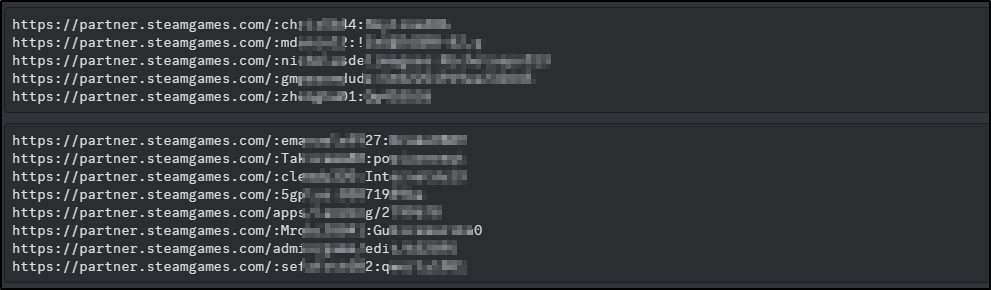

Up to this point, we’ve already pushed the limits, there’s no need to go further with PoCs or anything that could land us in jail. 🚨
The goal was never to show how to do it, but to make you think twice… or even more before trusting everything you download.
And I think you will. 😉